8 Effective different types of sharpening stones Elevator Pitches

An Unbiased View of Different Types Of Sharpening Stones

The other obvious advantage is the usage of water rather than oil to remove the swarf from the stone. Nevertheless, the water stone is not best. The softness that promotes quick cutting likewise uses the stone down quicker. This tends to wear the stone unevenly, which requires flattening to bring the stone back into shape.

These small commercial diamonds are much harder than any of the other honing stones. However, not all diamond stones carry out the same function, nor are they constantly developed equivalent. There are two primary types of diamond stone designs. The more typical style contains holes in the diamond surface area to record the swarf.

The next type is the continuous diamond surface area. These stones are chosen when you are sharpening tools with points that might get caught in the recesses of the non-continuous diamond surface area. Both types of diamond stones are readily available in mono-crystalline and poly-crystalline diamonds. The mono-crystalline diamonds are preferred as they will last longer.

In truth, extra-coarse diamond stones are frequently utilized to flatten oil or water stones. The primary downside of the diamond stone is its initial expense. While these stones are the most costly, they will likewise last a very long time, so the long-term cost can be equivalent to what are the different types of sharpening stones other stones. There are great factors why there are different kinds of honing stones readily available.

All About What Type Of Sharpening Stone Do I Have

Choosing the ideal one begins by finding the stone with the finest mix of benefits for your specific sharpening needs. View Diamond Stones Watch a Video on Choosing a Sharpening Stone Monday through Friday, 8 a.m. – 4:30 p.m. Phone US: 1-800-351-8234Outside US: +1 -608 -203 -1129.

Topics Covered: Oil Stones Arkansas Stones Diamond Stones Water Stones Summary Which type of sharpening stone you pick is largely a matter of personal option similar to what kind of automobile you prefer. Some individuals enjoy Arkansas stones and would utilize absolutely nothing else, others prefer diamonds stones for their speed and ease of maintenance and others would just hone with water stones. kinds of whetstones.

Sharpening Stones are likewise called whetstones. The word "whetstone" is derived from the word "whet" which indicates to sharpen. This contrasts the common belief that the name comes from their requirement to be soaked prior to use. There are four primary kinds of honing stones. 1. Oil Stones The oil stone has actually been utilized for several years to sharpen knives and tools.

The name oil stone describes the reality that you need oil to lubricate the stone before sharpening with it. There are two typical materials utilized make oil stones: Aluminum Oxide – This is among the most popular options when it pertains to man-made sharpening stone products and an extremely reliable abrasive for sharpening.

Some Known Questions About 3 Different Types Of Sharpening Stones.

You'll find these stones identified as coarse, medium or fine. Aluminum Oxide is a really hard abrasive ranked at 9 on the Mohs Firmness Scale making it an exceptional honing abrasive. Silicon Carbide – This is the fastest cutting oil stone. Silicon Carbide stones usually are available in a coarser grit so they can't produce an http://query.nytimes.com/search/sitesearch/?action=click&contentCollection&region=TopBar&WT.nav=searchWidget&module=SearchSubmit&pgtype=Homepage#/whetstone edge as sharp as the one from Aluminum Oxide or Novaculite.

Since they can hone quickly, you'll find the majority of people beginning their sharpening with them, then continuing to an India stone before ending up with an Arkansas. Oil stones are affordable costing in between $7 and $30 and have a typical grit variety of 100-600. 2. Arkansas Stones Arkansas Stones deserve their own category due to the fact that they can be used with oil or water.

The word Novaculite originates from a Latin word significance "razor stone". Arkansas stones have been quarried given that the early 1800s from bedrock deposits discovered in the Ouachita Mountains of Arkansas. They are cut into rectangular shaped whetstones to be utilized for sharpening knives and tools. The Arkansas stone is the most misunderstood of all honing abrasives.

The information offered listed below is from our own experience and screening. The specific gravity scores are from our own tests performed in May 2019. We tested four stones of each type. The values given listed below are an average of those four samples. Arkansas stones can be found in four grades; Soft, Hard, Black and Translucent.

Rumored Buzz on Types Of Dental Sharpening Stones

It is normally marbled in color with colors varying from white, gray, black, orange or pink. The grit is comparable to 400-600. The specific gravity of the Soft Arkansas stone is 2.22. Difficult Arkansas – The Hard Arkansas stone is the great grit stone. It is typically white to off-white in color but can have some light orange or reddish colors blended throughout the stone.

The particular gravity of the Hard Arkansas is 2.32. Black Arkansas – The Black Arkansas stone is among the finest of the 4. It is an extra-fine stone and is black or blue-black in color. The Black Arkansas Stone has a grit equivalent to 2000 grit. The specific gravity of the Black Arkansas is 2.55.

The color might be an uniform shade of really light gray, white or they will sometimes have light shades of pink going through them. The grit is comparable to 3500-4000. The specific gravity of the Clear Arkansas is 2.56. Arkansas Honing Stones 3. Water Stones Water stones can be either natural or man-made (artificial) stones.

Natural Waterstones have been quarried in Belgium and Japan for centuries and hold a special place in sharpening stone history and lore. Belgian whetstone production began as an outcome of the Roman Conquests and the stones have actually been exported from Belgium considering that the 17th century. There are 2 kinds of Belgian honing stones; the Coticule and the Belgian Blue Stone (BBW).

Types Of Diamond Sharpening Stones Can Be Fun For Everyone

Belgian Sharpening Stones Natural Japanese sharpening stones are ending up being limited after centuries of quarrying however they are still available today. The majority of these stones are mined near Kyoto, Japan and are extremely searched for by straight razor users and knife lovers. Japanese whetstones range in grits from 500 to 10,000 and expense from $25 for a Nagura stone to $500+ for bigger stones.

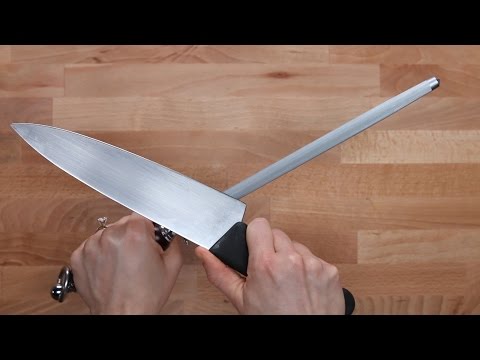
A Step-by-Step Guide to types of sharpening stones

The Definitive Guide to Natural Sharpening Stones

.

For those of you who are not familiar with either of these types of whetstones, Japanese Water Stones are mined in the mountains of Japan. They are made from from ancient deposits of metamorphic stone that includes tiny silicate particles suspended in a clay matrix. As a result, the fine crystals they produce when honing a knife blade tend to remove the steel really rapidly while likewise polishing the surface.

They come from ancient deposits of Novaculite which is thought to be a metamorphic sandstone. Novaculite also produces fine crystals when usage to sharpen a knife blade and, it too, has the home of removing steel fairly rapidly while also polishing the surface area. Then, there are guy made whetstones made from powdered, industrial grade, diamonds as well as from silicon carbide impregnated ceramic which do not need any sort of lubrication.

Fascination About Oil Stones

For example, depending upon the type of whetstone you are using, you might initially require to lube it either with water or honing oil. Then, you start by comprehending the knife by the handle and positioning the edge against the whetstone at a 10 degree to 30 degree angle depending upon the density of the Primary Bevel and then, slowly move the whole length of the cutting edge across the whetstone while preserving the very same angle.

Then, you continue to perform this action, rotating from side to side, until the edge reaches the preferred sharpness. Nevertheless, if you are among the lots of people who has trouble keeping a constant angle during honing, then there are numerous various types of developing help on the market that will allow you to develop a fine edge on any kind of knife blade.

In addition, the appropriate honing angle is determined by the relative density of the of the Secondary Bevel which is, in turn, governed by the kind of blade grind. Last, as a general guideline, manmade whetstones such as Crystalon and India Stones are the most inexpensive and work well for cutting preliminary, secondary, bevels or quickly repairing harmed edges whereas, natural whetstones such as Japanese Water Stones and Arkansas Oil Stones are more costly however, do a better task of creating, very sharp edges.

The 5-Minute Rule for Premium Sharpening Stone

But, no matter which type of whet stone you select, the real key to accomplishing a very sharp cutting edge is to preserve a consistent edge bevel angle throughout the entire honing process.

Many sushi chefs sharpen their valuable knives at the end of each work day. Edge life versus ease of honing – it depends on you to stabilize these considerations and select a suitable knife. However, you need to choose a knife that matches your level of sharpening experience and meets your requirements.

As you train your knife against the stone, you begin to customize the edge to your specific needs and honing style. With practice and excellent strategy, your knife should become sharper than it was in its original condition. Step 1: Soak or splash stone with water. Rough and medium stones should be taken in water for 10-15 minutes.

The Single Strategy To Use For Diamond Sharpening Stones

Step 2: Put the stone on damp cloth or base to support while honing. A stone base is constantly helpful as it provides clearance for your knuckles when you sharpen. It also raises the stone somewhat off your work surface area, so you have a better, simpler angle to work with.

Start with knife suggestion. Usage two or three fingers of left hand to press edge of blade to stone. Step 4: Keep a company grip on the knife, with shoulders square to the stone and upper body relaxed. Press edge of blade to stone and push along stone, exerting pressure as you progress and releasing pressure as you return blade to beginning position.

Once you have a burr, reverse the blade. Start with the tip. Apply more pressure on the down stroke and remove burr, or develop a double-sided edge if wanted. Japanese-Style Knives (Yanagi, Takobiki, Usuba, Kamagata Usuba, Deba Knives) Sharpen the whole cutting edge up until there is a small and even burr on the reverse side.

The Facts About Diamond Sharpening Stones Uncovered

Get rid of the burr with your middle and index finger carefully pushing the edge to the stone and your thumb carefully pushing the spine. Pushing both sides of the blade preserves the a little concave shape of the reverse side of the blade and assists make future sharpening possible. Think about the movement as if you are "pushing" water off the stone.

For maximum efficiency, it is very crucial to protect the initial shinogi line. Western-Style Knives Note the angle of knife to stone while honing. You need to also comprehend the bevel of your knife prior to honing. Angle the knife to develop the cutting edge. A 10º-20º angle is suggested. A smaller angle will make a sharper, but weaker cutting edge.

The EXPERT Summary: A dull knife not just makes slicing hard, using one is hazardous. If you need to sharpen one however you do not have a sharpener, you can utilize the bottom of a porcelain mug or plate. Just draw your blade down the rough part of the ceramic a number of times.

Facts About Diamond Sharpening Stones Revealed

Fortunately, there's a cheap and easy repair to all of your cutting problems– even if you don't have a sharpener helpful. All you need is a porcelain mug. Draw your blade throughout the rough bit on the bottom a number of times in fast succession. EXPERT As Delighted honing!.

Japanese whetstones (also called water stones)– both natural and artificial– are understood for their quick-working qualities, not just for Japanese blades, however also for their Western equivalents. The small particles that do the cutting are loosely bound together in the stone, therefore throughout sharpening with the whetstone, the surface area particles are rapidly washed out, permitting new, sharp, particles to start working on the blade.

Introduce Yourself (Example Post)

This is an example post, originally published as part of Blogging University. Enroll in one of our ten programs, and start your blog right.

You’re going to publish a post today. Don’t worry about how your blog looks. Don’t worry if you haven’t given it a name yet, or you’re feeling overwhelmed. Just click the “New Post” button, and tell us why you’re here.

Why do this?

  • Because it gives new readers context. What are you about? Why should they read your blog?
  • Because it will help you focus you own ideas about your blog and what you’d like to do with it.

The post can be short or long, a personal intro to your life or a bloggy mission statement, a manifesto for the future or a simple outline of your the types of things you hope to publish.

To help you get started, here are a few questions:

  • Why are you blogging publicly, rather than keeping a personal journal?
  • What topics do you think you’ll write about?
  • Who would you love to connect with via your blog?
  • If you blog successfully throughout the next year, what would you hope to have accomplished?

You’re not locked into any of this; one of the wonderful things about blogs is how they constantly evolve as we learn, grow, and interact with one another — but it’s good to know where and why you started, and articulating your goals may just give you a few other post ideas.

Can’t think how to get started? Just write the first thing that pops into your head. Anne Lamott, author of a book on writing we love, says that you need to give yourself permission to write a “crappy first draft”. Anne makes a great point — just start writing, and worry about editing it later.

When you’re ready to publish, give your post three to five tags that describe your blog’s focus — writing, photography, fiction, parenting, food, cars, movies, sports, whatever. These tags will help others who care about your topics find you in the Reader. Make sure one of the tags is “zerotohero,” so other new bloggers can find you, too.

Design a site like this with WordPress.com
Get started